
Even After The slave Trade that took Trillions of dollars of African Money people and resources no one dares call you a nigger if you are African American , And Even After The Stolen Billions Of dollars money From Nigeria’s Economy Lodged in many American Banks Till Today they still dare to label us as Scammers on million dollars .
who is the real scammer ?
the interest from abacha loot is enough to pay for all the scams nigerians have perpetrated in america yes you found the abacha loot give it back or give back the interest !
we are still being conned 
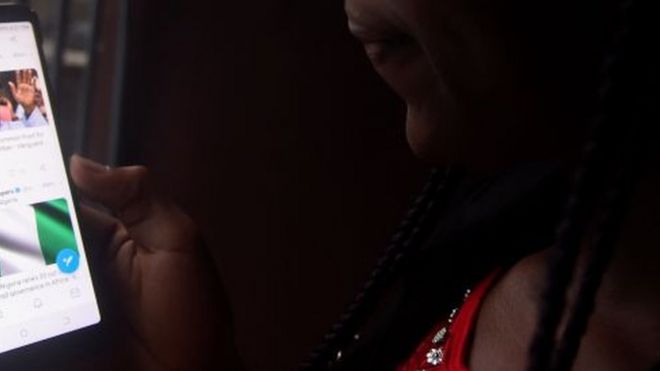
The US authorities have charged 80 people, “most of whom are Nigerian nationals”, with participating in a conspiracy to steal millions of dollars, prosecutors say.
They are accused of using business email fraud schemes and romance scams to con victims – many of them elderly.
Police have so far arrested 14 suspects across the US, 11 in Los Angeles alone.
Others are thought to be in Nigeria and authorities there say they will cooperate with US.
Prosecutors say it is one of the “largest cases of its kind in US history”.
The FBI investigation is a major step to disrupt criminal networks, US Attorney Nick Hanna said.
THANK YOU AMERICA BUT WAIT A MOMENT
The US must release the Abacha loot. Does Nigeria have the will to push for it?

The US controls the fate of Abacha’s loot – but so does Nigeria.
It’s been more than two decades since Sani Abacha – the Nigerian dictator with a love for dark sunglasses, exterminating political dissidents and looting billions of dollars from the treasury – died. Still, every other year, there’s a revelation of a new tranche of money stashed away in his name.
It’s the gift that keeps on giving – the handouts from the great beyond. One analyst jokingly called it the “2nd Sovereign (or Looted) Wealth Fund”; another commentator called him “Nigeria’s very own angel investor.”
Donny Sanllehi@DolarpoAbacha has died since 1998 yet he is still bailing us out with funds from the 2nd Sovereign (or Looted) Wealth Fund he created for us. Legend. Hero. Lol.
132
Twitter Ads info and privacy

The latest discovery was in early June – $267m in an account traced to the late despot and hidden in the tax haven of the Channel Islands, where he had laundered it into through the USA. As it stands, that money could go into the Criminal Confiscation Fund and be used for infrastructure projects on the islands.
- The Nigerian, US and Jersey governments now have to begin what is potentially a long road in reaching an asset-sharing agreement.
Africa’s once-largest economy needs all the cash inflow it can get:
- The Nigerian government continues to drain the Excess Crude Account – which had dropped from $2.3bn in November 2018 to a miserly $183m as of March 2019, leaving the economy vulnerable to any oil crash. This value is less than the Abacha loot under consideration.
- Nigeria also has debts of N24.3trn ($79.29bn) as of November 2018.
- Also the the poverty capital of the world – with 87 million people in extreme poverty in 2018 – Nigeria is in the fiscally unsustainable position of currently borrowing to pay civil servant salaries.
The Swiss government has historically been more pliable than the US, returning $322m previously stashed in Luxembourg, that was disbursed to low-income earners via a direct cash transfer programme to 302,000 beneficiaries across 19 of Nigeria’s 36 states.
So the million-dollar question remains: why is there an impasse in the negotiations between the US and Nigeria over repatriation of the funds? A government official who has been involved in discussions between both countries explains:
- “According to US law, when it discovers such monies and makes an announcement, that money is in all likelihood, not yet in an American bank, but is in a financial jurisdiction in which the US has some sort of control; in this case, the Channel Island of Jersey. Still, it is an incredibly long litigation process for prosecutors to convince the American courts that the money ought to be repatriated inwards. Also, because the monies are frozen, that makes the process doubly long because separate court sanctions are needed.”
All of this because the American judicial system wants confirmation first that the funds are proceeds of corruption and also needs guarantees that they will not be looted again or diverted, with standard controls for preventing that established and documentation on the planned utilisation provided.
It is an incredible amount of bureaucracy and diplomacy that has to go on behind the scenes for years.
“As I understand it, if the decision is to use the funds in paying for, says, a series of road constructions or building a world-class hospital in each of Nigeria’s six geopolitical zones, these US officials would have to ensure that the money is paid directly to contractors. Cases like the lingering controversy around the recovery of the Swiss funds, only serve to increase the reluctance of the Americans to return these monies without die diligence”, says the official.
- The most cynical might believe that because Nigerian government officials have no personal vested interest — the window for skimming off the contracts is closed — they won’t bother to push the US to return the money.
- Those who are lost causes of cynicism might believe that the highest officials in Nigeria’s legal system have links to the Abacha family, and have every interest in leaving the money fallow abroad, rather than let the Nigerian government and people reclaim their monies.
- Those who have died and gone to whatever afterlife is reserved for cynics might even suggest those officials sit on their hands and rely on the court of public opinion to bash the Americans for withholding Nigeria’s birthright.
But you are not a cynic, right?
“This case is part of our ongoing efforts to protect Americans from fraudulent online schemes and to bring to justice those who prey upon American citizens and businesses,” he added.
The FBI started investigating the case in 2016 in a single bank account but it later extended to cover multiple victims in the US and around the world.
All the 80 defendants have been charged with conspiracy to commit fraud, conspiracy to launder money, and aggravated identity theft, the US Attorney’s Office in the Central District of California said in a press release.
Many suspects abroad
Two Nigerian nationals, identified as Valentine Iro and Chukwudi Christogunus Igbokwe, who are part of those arrested in the US, have been named as co-conspirators working with others in the US and in Nigeria, to obtain money from victims and then transfer it abroad.
They managed to fraudulently obtain $6m (£5m) in a conspiracy aimed at stealing $46m, the US Attorney’s Office alleges.
The remaining 66 defendants are believed to be abroad, “with most them located in Nigeria”, the authorities say.
Those named should be handed to the US to face a trial, Abike Dabiri-Erewa, who heads the Nigerian government’s diaspora commission said in a statement.
“We… ask those accused in Nigeria to voluntarily turn themselves in to American authorities to clear their names, without which the Nigerian government should extradite them if relevant international treaties between the two governments are invoked.”
The actions of a few should not tarnish all Nigerians, she added.
Fake US soldier
The suspects used illicit money exchangers to move money to Nigeria, generally avoiding transferring the funds directly through banking institutions, the indictment says.
The authorities have listed a total of 252 charges against the 80 suspects.
One of the victims, a Japanese woman named FK in court papers, was conned out of $200,000 after being contacted by a fraudster identifying themselves as US Capt Terry Garcia who wanted to smuggle diamonds out of Syria.
She made 35 to 40 payments, receiving as many as 10 to 15 emails a day directing her to send money to accounts in the US, Turkey and the United Kingdom through the captain’s many purported associates, the LA Times reports.