

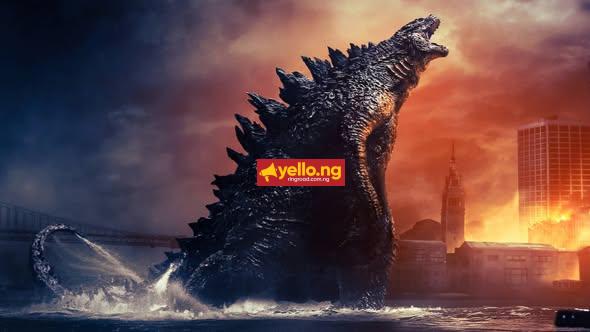
| Feature | Standard Modern Godzilla (MonsterVerse / Evolved) |
Godzilla Earth (Anime Trilogy) |
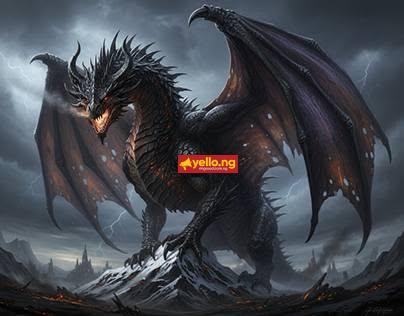
Ancalagon the Black (Tolkien Legendarium) |
|---|---|---|---|
| Height | 426 feet (130 meters) | 984 feet (300 meters) | Estimated at thousands of feet tall |
| Length / Wingspan | 771 feet long (full body) | ~1,500+ feet long | Wingspan estimated up to multiple miles wide |
| Weight | 99,634 to 110,000 tons | 100,000 metric tons | Unquantifiable (Crushed volcanoes upon impact) |
-
- When he was slain by Eärendil, his massive body fell from the sky and completely crushed the towers of Thangorodrim.
- In Tolkien’s map notes, Thangorodrim consisted of three massive volcanic mountains taller than Mount Everest.
- For a creature’s body to fall and fully level a three-peak mountain range, fan calculations and lore analysis scale his physical presence to the size of a literal continental landmass or moving mountain.

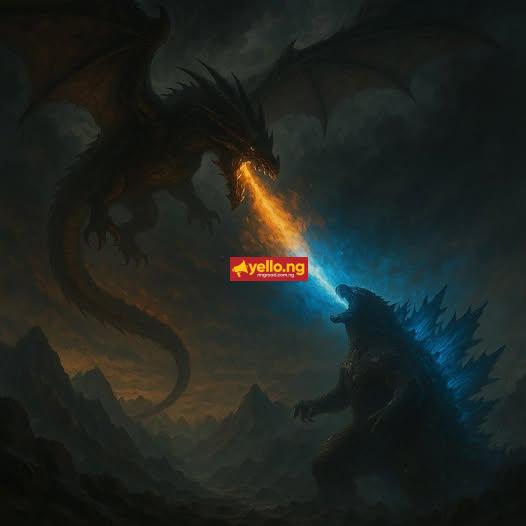
- Compared to Standard Godzilla: To a standard 400-foot-tall Godzilla, Ancalagon would look like a living storm cloud blotting out the entire sky. Godzilla would essentially be a speck of dust relative to the dragon’s claws.
- Compared to Godzilla Earth: At nearly 1,000 feet tall,Godzilla Earth is the only version big enough to visually register against Ancalagon. While still physically outweighed and smaller than a creature that breaks mountains,Godzilla Earth wields an impenetrable asymmetric permeable shield (shielding against physical forces) and an atomic breath capable of sniping targets out of orbit, turning it into a fight of magical mass versus pure sci-fi destructive energy
| Feature | Godzilla in Hell (IDW Comics) | Ancalagon the Black (Tolkien) |
|---|---|---|
| Physical Base Height | Estimated between 820 to 1,350 feet (250–410 meters) depending on the panel | Estimated thousands of feet tall (mountain-scale) |
| Maximum Potential Size | Infinite / Multiversal (can scale past planetary size) | Firmly capped at Continental / Mountain Range size |
| Key Feat | Killed the literal supreme Creator of Heaven and Hell | Crushed three massive volcanic peaks upon falling |
-
- Animals lack human agency: In the Bible, demons occasionally possess humans or, in one famous instance, a herd of pigs (Matthew 8:31-32). However, these possessions were temporary and meant to cause immediate destruction.
- Dinosaurs were just animals: Theologians view dinosaurs simply as part of God’s physical creation. They ate, slept, reproduced, and died like modern reptiles, birds, or mammals. They did not have the spiritual capacity or moral agency to “be” demons.
-
- Fossil Evidence: Fossils show that dinosaurs had bones, organs, muscles, diseases (like arthritis and cancer), and injuries that healed.
- Evolutionary Links: Their physical traits directly connect them to modern reptiles and birds. There is no biological or physical evidence to suggest they were anything other than normal, ancient wildlife.
-
- The Gap Theory: This is a specific theological interpretation of Genesis 1:1–2. Some readers suggest a massive “gap” of time occurred between those two verses, during which Satan fell to Earth and ruined the original creation, resulting in the extinction of dinosaurs. Even in this niche theory, the dinosaurs themselves are not considered demons; rather, their sudden destruction is tied to the fall of Satan.
- Overlapping Imagery: Because ancient texts (including the Bible) use words like “dragon,” “serpent,” or “Leviathan” to metaphorically describe Satan or evil forces, some people visually confuse prehistoric reptiles (dinosaurs) with these spiritual metaphors.

-
- Dinosaurs: These are a diverse group of terrestrial reptiles that ruled the planet during the Mesozoic Era until their extinction about 65 million years ago.
- Dragons: These are make-believe creatures rooted in the mythology, art, and legends of diverse civilizations globally (e.g., Eastern and Western folklore).
- Flight and Fire: Most dinosaurs were land-dwelling and could not fly or breathe fire. Conversely, dragons are universally depicted with massive wings (like the classic wyvern design) and elemental powers.
- Evolution: Paleontologists actually classify modern birds as modern, avian dinosaurs. Dragons have no biological lineage and are purely the product of human imagination.
- Fossil connections: Some paleontologists and researchers (such as Stanford’s Adrienne Mayor) suggest that ancient people finding the massive, intact bones of dinosaurs like Sauropods or Triceratops contributed to stories of dragons
-
- Ancalagon the Black (The Lord of the Rings Lore): The largest dragon in J.R.R. Tolkien’s universe. When he fell in battle, his massive body crushed an entire mountain range (Thangorodrim).
- The Alpha / Bewilderbeast (How to Train Your Dragon 2): A colossal, tusked, ice-spitting sea dragon that dwarfs all other dragons in its universe.
- Balérian the Black Dread (A Song of Ice and Fire / House of the Dragon): The largest of the Targaryen dragons ridden by Aegon the Conqueror. His wingspan cast entire towns into darkness, and he could swallow a mammoth whole.
- Vhagar (House of the Dragon): Nearly as large as Balerion by the time of the Dance of the Dragons. She is described as a living mountain with a roar that shakes foundations.
- Smaug (The Hobbit): Estimated to be around 200 feet (60 meters) long. He was massive enough to single-handedly destroy the Kingdom of Erebor and sleep on a mountain of gold.
- King Ghidorah (Godzilla Franchise): A giant, three-headed space dragon standing over 500 feet (150 meters) tall, capable of causing worldwide storms with his wingspan.
- The Red Dragon / Great Red Dragon (Revelation / Biblical Lore): Visually described with seven heads and ten horns, with a tail so massive it could sweep a third of the stars out of the sky.
- Shenron (Dragon Ball): A magical, serpentine cosmic dragon whose physical coils can stretch across the horizon when summoned.
- Deathwing (World of Warcraft): A massive, molten-lava Aspect Dragon so large and heavy that elementium plates had to be hammered into his body to keep his physical form together.
- Fatalis (Monster Hunter): An ancient elder dragon of immense scale whose physical bulk and powerful tail can crush entire kingdoms.


| Rank | Dinosaur Name | Estimated Length | Estimated Weight | Native Region / Period |
|---|---|---|---|---|
| 1 | Spinosaurus | 46–49 feet (14–15m) | 7.5–10 tons | Africa / Cretaceous |
| 2 | Tyrannosaurus Rex | 40–43 feet (12–13m) | 8–9.5 tons | North America / Cretaceous |
| 3 | Giganotosaurus | 39–43 feet (12–13m) | 7–8.5 tons | South America / Cretaceous |
| 4 | Carcharodontosaurus | 39–41 feet (12–12.5m) | 6.5–8 tons | Africa / Cretaceous |
| 5 | Mapusaurus | 38–40 feet (11.5–12m) | 4–5 tons | South America / Cretaceous |
| 6 | Tyrannotitan | 38 feet (11.5m) | 5 tons | South America / Cretaceous |
| 7 | Acrocanthosaurus | 38 feet (11.5m) | 4.5–5 tons | North America / Cretaceous |
| 8 | Deinocheirus | 36 feet (11m) | 6.5 tons (Omnivore) | Asia / Cretaceous |
| 9 | Tarboasaurus | 33–39 feet (10–12m) | 4–5 tons | Asia / Cretaceous |
| 10 | Allosaurus | 28–32 feet (8.5–10m) | 2.5–3 tons | North America / Jurassic |
-
- Shantungosaurus: A truly massive duck-billed dinosaur (hadrosaur) that grew up to 55 feet (16.6 meters) long and weighed over 16 tons—making it larger than many meat-eating dinosaurs.
- Magnapaulia: A giant crested duck-billed dinosaur from North America, reaching lengths of 41 feet.
- Edmontosaurus annectens: A massive, hornless duck-billed dinosaur that reached 39-43 feet in length and weighed around 9 tons.
- Triceratops horridus: The largest of the horned dinosaurs (ceratopsians), reaching 30 feet in length and weighing up to 10 tons.
- Eotriceratops: A close relative of Triceratops with a massive skull that alone measured over 8.5 feet (2.6 meters) long.
- Ankylosaurus magniventris: The largest armored dinosaur, covered in bony plates with a massive club tail, weighing up to 8 tons.
- Stegosaurus stenops: The largest of the plated dinosaurs, reaching 30 feet in length, famous for the kite-shaped plates on its back.
- Therizinosaurus: A bizarre plant-eater with the longest claws of any animal in history (up to 3 feet long), weighing around 5 tons.
- Iguanodon: A highly successful herbivore with sharp thumb spikes, reaching lengths of 33 feet and weighing 4.5 tons.
- Pachyrhinosaurus: A heavy, horned dinosaur with a massive bony boss on its nose instead of a horn, weighing up to 4 tons.
The conversation about dragons versus dinosaurs isn’t silly, and it isn’t fringe. It’s uncomfortable. And that’s exactly why it’s mocked instead of debated. When a topic is dismissed rather than examined, it’s usually because it threatens a framework people rely on to make sense of the world.
What I want to do today is walk slowly through the case that dragons existed, why dinosaurs may represent a modern reclassification of those same creatures rather than an entirely separate ancient reality, and why this distinction matters far more than we’re told. Because this isn’t just about bones. It’s about history, memory, authority, and our relationship to creation itself.
One of the strongest starting points is something incredibly simple: human testimony. Humans have been recording animals for as long as we’ve been writing. We documented predators and prey, dangers and migrations, extinctions and survival. And when you examine those records across civilizations, one thing becomes very clear. Humans remembered dragons. They did not remember dinosaurs. No ancient culture describes a Tyrannosaurus rex. No tablets, carvings, cave paintings, or written accounts warn about Triceratops or Stegosaurus. There are no instructions for avoiding them, hunting them, or protecting livestock from them. Yet dragons appear everywhere, across continents that had no contact with one another.
And it’s not just that dragons appear. It’s how they appear. China, Europe, Mesopotamia, Africa, the Americas, Australia—each describes large reptilian creatures with scales, long tails, wings or wing-like appendages, territorial behavior, and immense danger. The cultural framing varies, but the biological outline stays surprisingly stable. That kind of consistency is not how fictional mythology behaves. It is how eyewitness memory behaves—different voices describing the same kind of thing, from different angles, in different languages, with different theology around it.
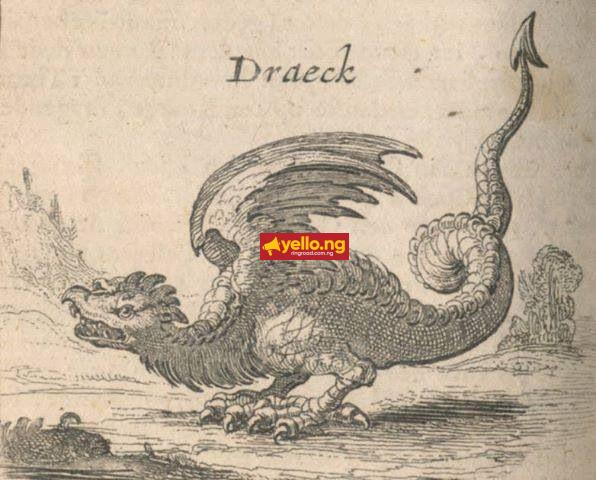
Now let’s make this more grounded than just “everybody says it.” Because the strongest case for dragons isn’t built on vibes. It’s built on documented patterns where dragons are treated like part of the natural world. In medieval Europe, dragons show up in bestiaries—early natural-history style texts—alongside animals we all recognize. The category is telling: dragons weren’t filed under “imagination,” they were filed under “dangerous creatures.” That doesn’t prove every detail people believed about them, but it does show how seriously they were treated at the time.
China is even harder to brush off, because it’s not just stories—it’s material culture. “Dragon bones,” known as longgu, were collected, sold, and used in traditional medicine for centuries. This is documented historically and still discussed today as fossils and ancient bones that were traditionally considered dragon remains.
And what’s fascinating here is that the interpretation changed over time. The substance didn’t change. People were literally pulling “dragon bones” from the earth; later frameworks reclassified what those were. Even academic writing on “Dragon Bone Hill” discusses the long-standing belief that fossilized bones were dragon remains within Chinese tradition.
Then you have the Chinese zodiac, which is one of those quiet details that refuses to go away. Eleven animals are plainly real. The twelfth is the dragon. You don’t place a creature into a practical cultural system—used for timekeeping and identity—unless that creature is understood as real, or at least rooted in something real. You can call that symbolic, sure, but you still have to answer why that symbol and not a dozen other mythical animals. Why the dragon, specifically?
Now let’s flip to the other side of the debate—the dinosaur story—and talk about what is taught there. Dinosaurs are built around fossils. Fossils are real. The question is what story we’re attaching to them. And here’s one of the most important documented facts: the word “dinosaur” was coined by Richard Owen in 1842. The UC Museum of Paleontology also states the term was invented by Owen in 1842 to describe those “fearfully great reptiles.”
This reframing doesn’t deny the physical evidence. It simply asks whether we’ve been handed the right narrative for interpreting it. Dragons weren’t erased from history—they were rebranded. And recognizing that possibility opens larger questions about how knowledge is shaped, controlled, and passed down. The discomfort comes from realizing that the past may be closer, and more alive in human memory, than the official story allows.