

Kamala Harris Makes History as the First Black Woman VP Pick on a Major Party’s Presidential Ticket
Kamala Devi Harris was born on October 20, 1964, in Oakland, California. Her mother, Shyamala Gopalan, was a breast-cancer scientist who had emigrated from Tamil Nadu, India in 1960 to pursue a doctorate in endocrinology at UC Berkeley. Her father, Donald Harris, is a Stanford University emeritus professor of economics, who emigrated from British Jamaica in 1961 for graduate study in economics at UC Berkeley

Joe Biden, the presumptive Democratic presidential nominee, announced Tuesday afternoon that Sen. Kamala Harris is his running mate, marking the first time in history that a Black woman has been chosen on either the Democratic or Republican Party’s presidential ticket.
Biden shared the news that he’s teaming up with the 55-year-old California senator in a tweet.
In another tweet, Biden praised Harris, who became the first Black woman to serve as attorney general in California and the second Black woman to be elected as a U.S. Senator.
If elected, Harris would be the first woman, first Black, and first Asian American vice president of the United States.
Last month, the freshman senator detailed what a Biden presidency would mean for Black Americans, touting Biden’s “Build Back Better” plan for economic recovery and racial equality. Under the plan, $150 billion would be invested in minority businesses, the minimum wage would be raised to $15 an hour, cash bail would be eliminated, and formerly incarcerated people would be provided temporary housing upon release from prison.
“This plan that Joe Biden is offering around dealing with racial disparity in the economy is a very important step because he is acknowledging that racial equities have to be a part of the priority,” said Harris during an exclusive interview with BLACK ENTERPRISE.
She went on to highlight parts of his plan that would cancel $10,000 of student loan debt for borrowers with federal student loans and make both public colleges and private HBCUs tuition-free for families making up to $125,000 a year.
“Ninety percent of black students take out student loans. And what he is proposing as part of his ‘Build Back Better’ plan is that for families who have an income of $125,000 or less, they will be able to attend HBCUs, including private HBCUs and public universities and colleges, tuition-free,” said the Howard University grad.
00:06 12:06
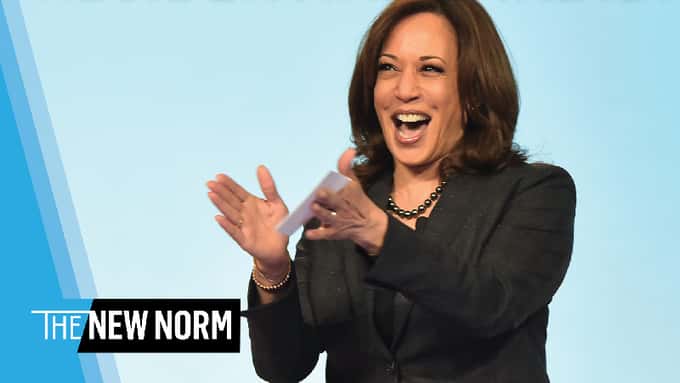
Last year, Harris opened up at the 2019 BLACK ENTERPRISE Women of Power Summit about being underestimated as a Black woman. “There have been moments where throughout my career people underestimated my ability to get something done,” she said during a keynote fireside chat.
She added that people also doubted her ability to win an elected office. “I’ve had the setback of attempting to run for office that nobody thought that we could win and all that comes with that.”
However, she turned those negative perceptions into a source of motivation. “Good, underestimate me,” she said. “I can work with that.”
ringroad.com.ng
Come November 3, Kamala Harris’ name will appear on the Democratic ticket for president alongside former Vice President Joe Biden, making her at least the 11th woman to run for the position.
From the outset of his campaign, Biden vowed to pick a female running mate and announced his long-awaited decision on Tuesday. Harris, who ended her own bid for the presidency in December, endorsed Biden in early March and said she would do “everything” in her power to help the presumptive Democratic nominee become president.
If Biden wins in November, it’ll be the first time a woman will occupy the residency at Number One Observatory Circle not as a wife, but as the vice president. It’s not for a lack of trying though, and Harris is just the latest woman in a 136-year history to run for the position.
In 1884, Marietta Stow became the first woman to run for vice president. She was the running mate to Belva Lockwood and the two ran under the banner of the Equal Rights Party. That same year, Stow, a newspaper owner, ran as an independent for governor of California to demonstrate the irony of women being unable to vote, according to GW Magazine.
It would take 100 years for a woman to be the vice-presidential nominee for a major political party, though. In 1984, Democrats faced pressure to pick a woman as the vice-presidential candidate because people believed it would help the party oust President Ronald Reagan from office. That July, Democratic candidate Walter Mondale selected Geraldine Anne Ferraro, a member of Congress at the time, as his vice president.
“I think it’s very exciting, for several reasons – one of which is that people are no longer hiding behind their hands and giggling when they talk about a woman for national office, and I think that’s wonderful,” Ferraro told The Christian Science Monitor in May 1984 of rumors she could be named as the vice-presidential candidate.
Before Biden’s nominee announcement, only one other woman, Sarah Palin, had run as the vice-presidential candidate for a major political party. Palin was the first woman to be a vice-presidential candidate for the Republican Party and ran with Senator John McCain in 2008.