

Pax Americana: The American Peace, Its Global Architectures, and the Reckoning in Africa and Nigeria
Pax Americana—”American Peace”—is the term historians and strategists use for the era of relative global stability that followed World War II, when the United States emerged as the preeminent economic, military, and cultural power. Modeled on Pax Romana and Pax Britannica, it describes a unipolar order centered on Washington, underpinned by institutions like the United Nations, IMF, World Bank, NATO, and the dollar’s role as the world’s reserve currency. Though framed as consensual and cooperative, its defining feature has been American preponderance: military alliances spanning the globe, control of sea lanes and commons, and the enforcement of a liberal international order favoring open markets, democracy promotion, and U.S. security interests.
By 2026, this order is fraying. The second Trump administration’s “America First” doctrine—transactional, skeptical of multilateral commitments, and focused on domestic reindustrialization—has accelerated a shift toward multipolarity, or what some call Pax Multipolaris: a fragmented system of rival powers, regional blocs, and raw interest-based deals rather than U.S.-led rules. For the world, this means uncertainty: the “Long Peace” among great powers may give way to renewed competition. For Africa—and Nigeria in particular—the transition exposes both the benefits and burdens of living under the American umbrella, while opening space for agency amid intensifying rivalry from China, Russia, and others.
The Global Pillars and Paradoxes of Pax Americana
Post-1945, the U.S. built a system that prevented another world war between major powers. Nuclear deterrence, alliances, and economic integration created the longest stretch of great-power peace in modern history. Trade exploded, poverty plummeted globally, and institutions channeled disputes into diplomacy rather than conquest. The dollar’s dominance allowed the U.S. to run deficits while exporting stability; American military bases and carrier groups policed the oceans and deterred aggression.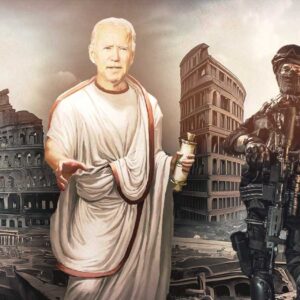
Yet the peace was selective and often enforced through violence. Critics label it “Pox Americana”—a system that tolerated or enabled proxy wars (Korea, Vietnam, Afghanistan), regime changes, and support for anti-communist dictators during the Cold War. Interventions in the Global South frequently prioritized U.S. access to resources and markets over local sovereignty. Hegemonic stability theory credits U.S. power with order; skeptics argue aversion to war among developed nations, not American arms alone, drove the Long Peace.
By the 2020s, cracks widened: the 2008 financial crisis, endless Middle East wars, domestic polarization, and China’s rise eroded U.S. credibility. Trump’s return in 2025 reframed global engagement as a burden, slashing aid, imposing tariffs, and prioritizing bilateral deals. The result is not collapse but relative decline—America remains the top military power, but BRICS+ now accounts for over 45% of global GDP (PPP), and rivals challenge dollar hegemony and institutional norms.
Pax Americana in Africa: From Cold War Chessboard to Multipolar Arena
Africa’s encounter with Pax Americana was mediated by decolonization. The U.S. rhetorically backed self-determination but pragmatically backed proxies to contain Soviet influence—arming Mobutu in Zaire, supporting apartheid South Africa for strategic minerals, or intervening in Angola and the Horn. Post-Cold War, the focus shifted to democracy, human rights, HIV/AIDS relief, and counterterrorism via AFRICOM (established 2007). Aid flows, trade preferences like AGOA, and security partnerships aimed to stabilize markets and deny space to rivals.
Benefits were real: billions in assistance saved lives, built institutions, and integrated African economies into global supply chains. Yet critics point to structural adjustment programs that deepened debt and inequality, support for flawed regimes, and a security lens that treated Africa as a theater for U.S. interests rather than a partner. Resource extraction—oil, minerals—often flowed westward while local agency was sidelined.
The multipolar turn has been stark. Under Trump 2.0, U.S. aid has been cut sharply, reframed as “commercial diplomacy” emphasizing trade, investment, and self-reliance over dependency. China has filled infrastructure gaps via Belt and Road; Russia offers arms, mercenaries (now Africa Corps), and disinformation in the Sahel and beyond. Africa is no longer a passive recipient but a contested prize—critical minerals, young demographics, and strategic geography make it central to great-power competition. The risk: fragmentation, proxy conflicts, and weakened continental institutions as powers pick favorites. The opportunity: greater leverage for African states to demand better terms.
Nigeria: Oil Ally, Security Partner, and Reluctant Pivot
Nigeria, Africa’s most populous nation and largest economy, exemplifies the double-edged legacy. Post-independence, U.S. engagement centered on oil (Nigeria remains a key exporter), democracy (supporting the 1999 transition after military rule), and later counterterrorism. Washington backed Nigerian leadership in ECOWAS and the Multinational Joint Task Force against Boko Haram. Billions in aid, military training (IMET, Foreign Military Sales including Super Tucano aircraft and AH-1Z helicopters), and intelligence sharing helped professionalize forces and disrupt jihadists.
Yet outcomes were mixed. Boko Haram and ISWAP persist after nearly two decades; farmer-herder clashes, banditry, and governance failures complicate the picture. U.S. pressure on human rights and corruption sometimes strained ties, while oil politics invited accusations of neo-colonialism. Economically, dollar-denominated trade and IMF/World Bank influence tied Nigeria to global cycles—booms during high oil prices, busts during crashes—while limiting diversification.
In 2026, relations are transactional and security-first. After losing its Niger base, the U.S. quietly expanded cooperation with Nigeria: military supplies delivered in January, coordinated airstrikes on ISIS camps in Sokoto State on Christmas Day 2025 (framed by President Trump partly as protecting Christians, a claim Nigerian officials dispute), and deployment of a small U.S. advisory team (~100 troops) in February for training, intelligence, and targeting support against jihadists. AFRICOM emphasizes partnership; Nigeria insists on sovereignty.
Aid cuts and tariffs test the relationship, pushing Nigeria toward revenue mobilization and diversified partners. China invests in infrastructure and oil; Russia courts via trade, education, energy deals, and information operations. Nigeria’s BRICS partner status and Tinubu administration’s diplomacy reflect hedging—balancing U.S. security muscle with non-Western economic options.
Investigatively, this reveals Pax Americana’s imprint: it provided a security blanket and market access that helped stabilize Nigeria’s democracy and economy but fostered dependency and uneven development. As the U.S. retrenches, Nigeria faces harder choices—deeper self-reliance risks instability if counterterrorism falters; over-reliance on new partners invites debt traps or influence peddling.
The Receding Tide: Implications and Africa’s Path Forward
Pax Americana delivered unprecedented global growth but at the cost of sovereignty for many in the Global South and rising inequality everywhere. Its decline—driven by U.S. domestic fatigue, fiscal strains ($38+ trillion debt), and assertive rivals—ushers in turbulence. For the world: higher risks of regional conflicts, disrupted trade, and contested norms. For Africa: a vacuum that could spark proxy wars or empower local agency. Nigeria, with its demographic boom (projected to surpass the U.S. in population by mid-century) and resource wealth, stands at the crossroads—poised for leadership if it harnesses multipolarity, vulnerable if fragmentation deepens.
The investigative truth is neither nostalgia for hegemony nor romanticization of multipolarity serves Africa. Pax Americana was never purely benevolent, nor is the emerging order inherently emancipatory. Nigeria and the continent’s best path lies in pragmatic diversification, strengthened regional institutions (AU, ECOWAS, AfCFTA), and demands for equitable partnerships—extracting value without subordination. Whether the American Peace’s legacy endures as institutions or simply as a cautionary tale of power’s limits will depend on how the Global South navigates the transition. In Abuja and beyond, the question is no longer whether U.S. dominance wanes, but who fills the space—and on whose terms.