


From Chimpanzini Bananini to Ballerina Cappuccina: Inside Gen Alpha’s Obsession With Italian Brain Rot Animals
If you were born after 2000—or know someone who was—there’s a good chance you’ve stumbled across a strange, chaotic corner of the internet filled with characters like Bombombini Gusini and Trippi Troppi. If not, don’t worry. The point of these memes is that they make absolutely no sense.
Tim, a secondary school teacher, first heard the phrase “Italian brain rot animal” from one of his year 8 students.
“I thought I misheard,” he says. “I had to ask her to repeat it about five times.”
He knew what brain rot meant—mental burnout from scrolling endlessly online, which Oxford University Press even named its 2024 Word of the Year—but the “Italian” part baffled him.
A quick Google search later, and Tim discovered a surreal world of AI-generated animal characters with ridiculous Italian-sounding names, accompanied by fast-paced, nonsensical “Italian-ish” narration on TikTok.
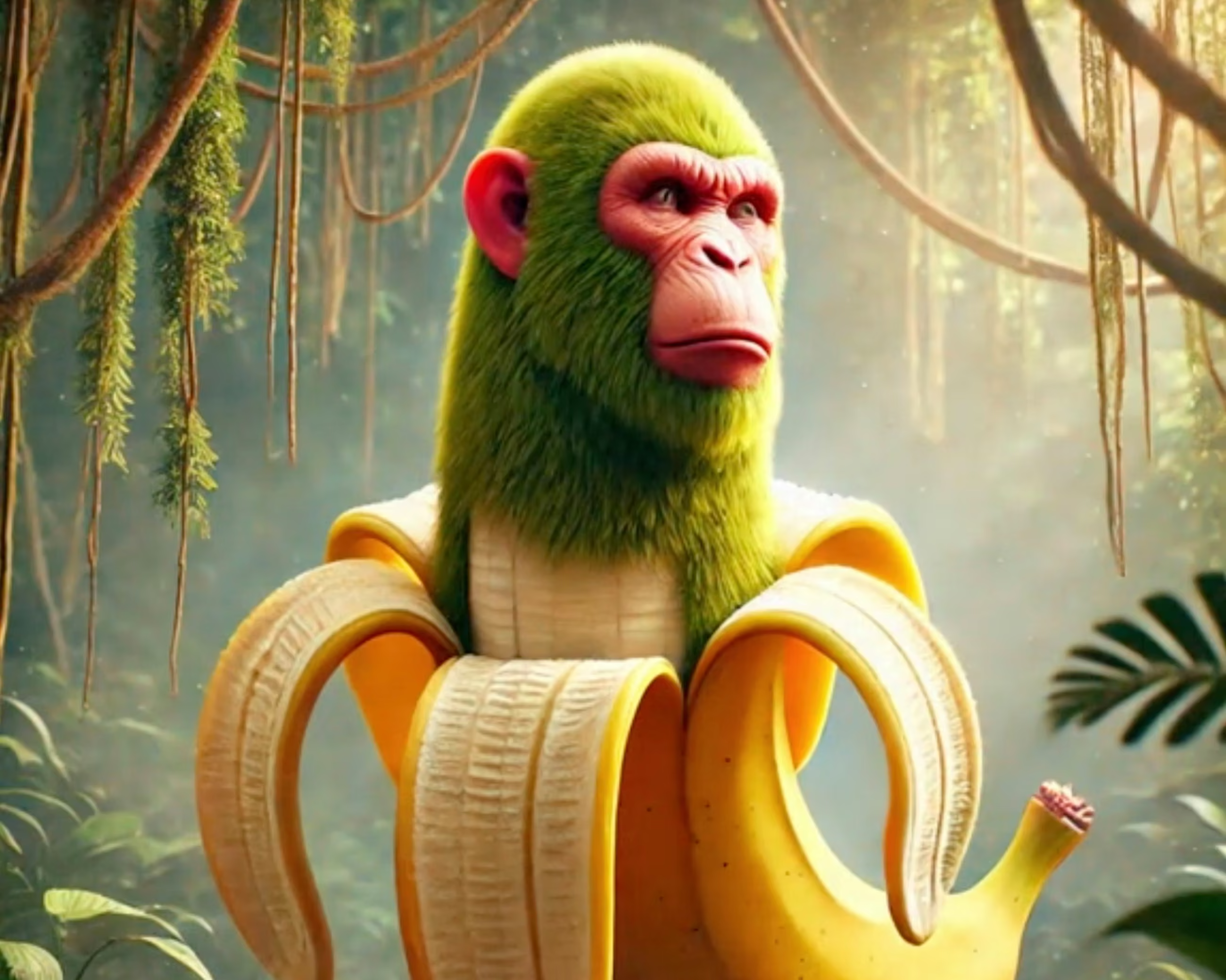
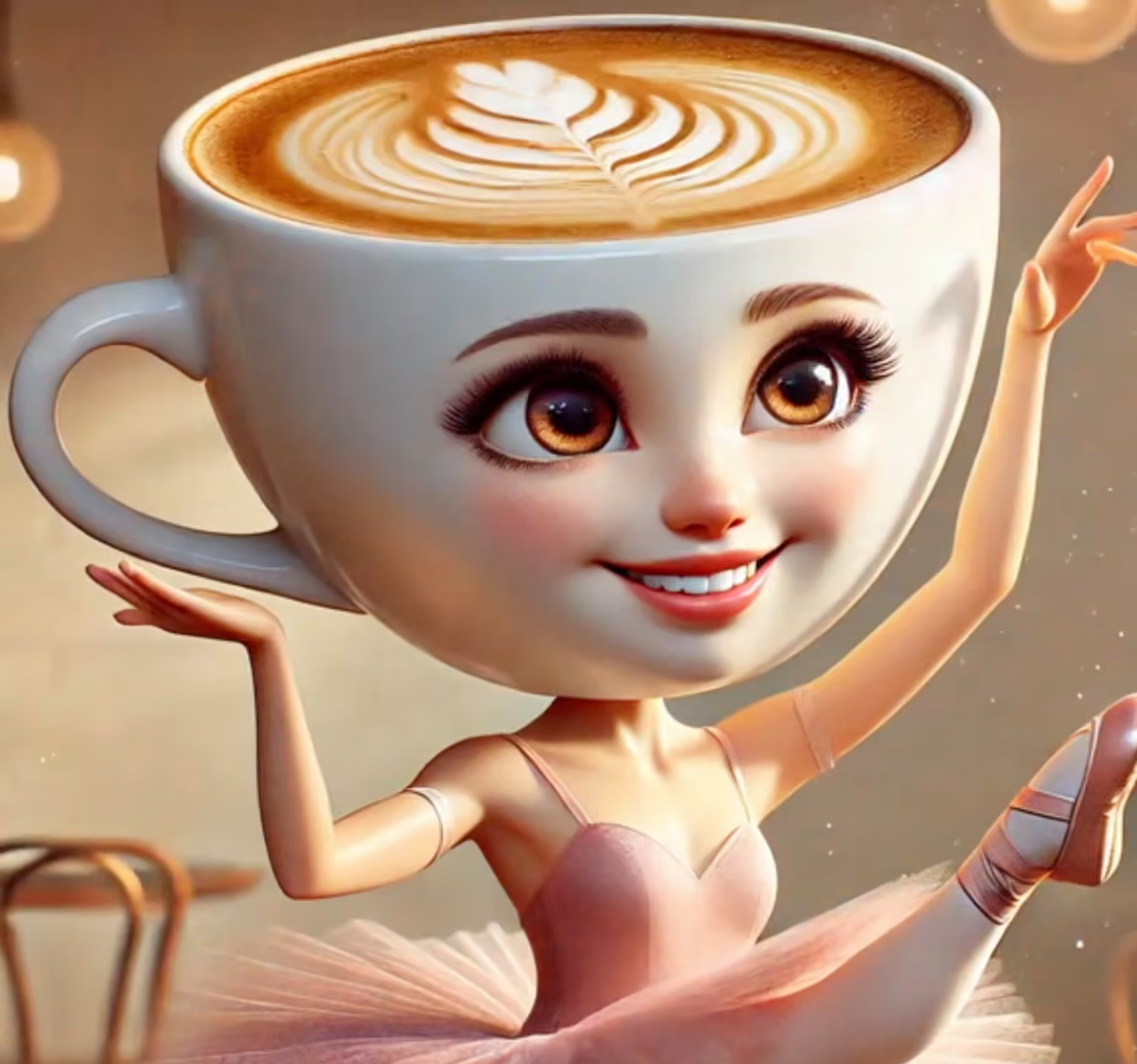
Think Chimpanzini Bananini (a chimp fused with a banana), Bombardiro Crocodilo (a crocodile merged with a bomber plane), and Ballerina Cappuccina (a coffee cup with ballerina legs who’s apparently dating Cappuccino Assassino).
“They’ve got lore,” Tim explains. “Some are at war. Some have theme songs. It’s a whole universe.”
His students, like much of Gen Alpha (born 2010–2025) and younger Gen Z, are hooked. “As soon as one person mentions it, the whole class explodes,” Tim says. “They’re obsessed.”
For anyone born before the year 2000, the whole thing can feel like brain decay in real time—but that’s kind of the point.
The Rise of Italian Brain Rot
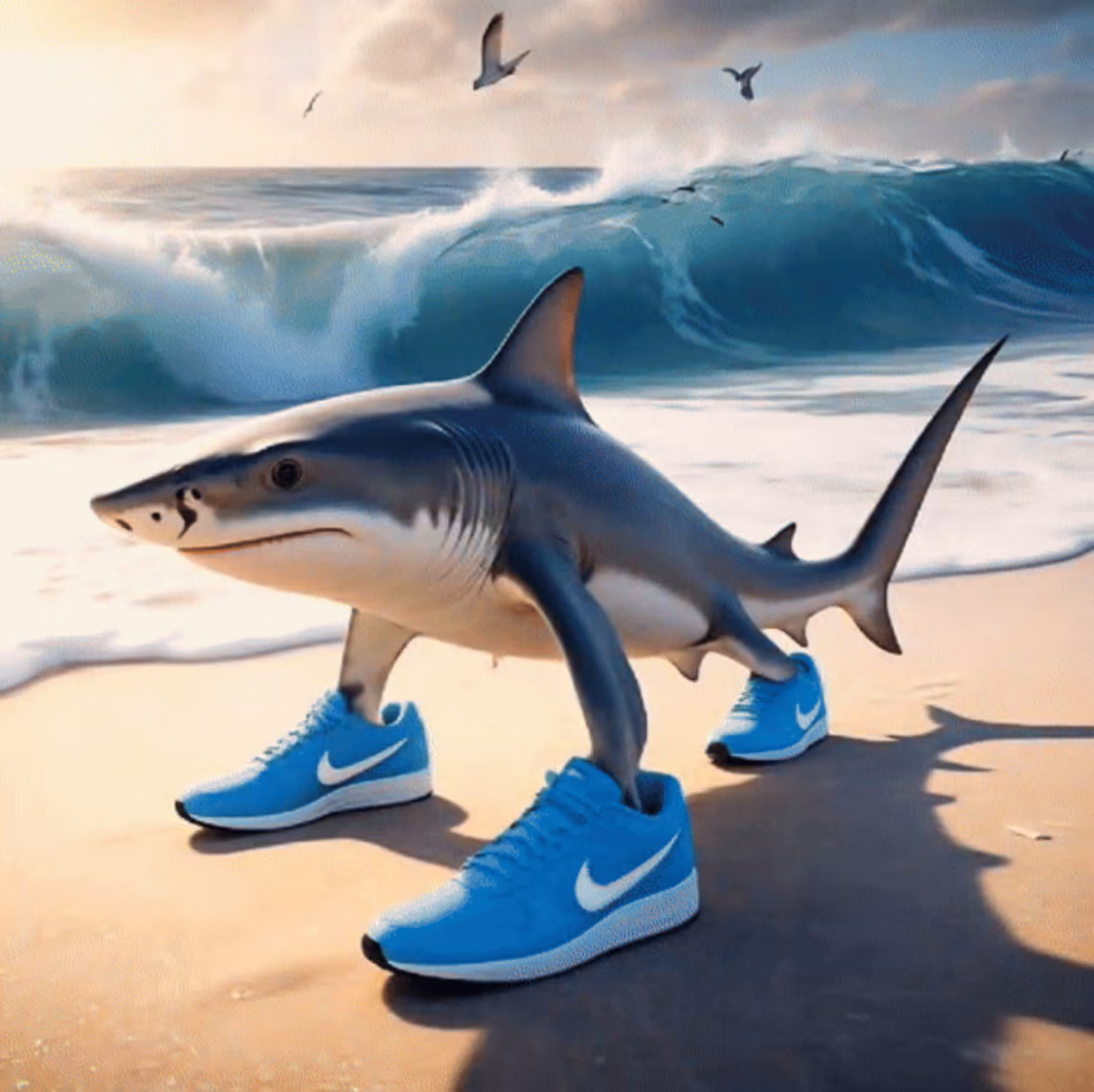
The first viral character, Tralalero Tralala, was a shark wearing Nike sneakers on each fin, paired with an AI voice speaking fake Italian gibberish. Within weeks, TikTok was flooded with similar creations.
Don Caldwell, editor-in-chief of Know Your Meme, says the audio matters just as much as the visuals. “It’s not real Italian—it’s the exaggerated idea of Italian,” he explains. “You’ll hear: ‘Tra-la-lero! Tra-la-lala!’ It’s ridiculous, and that’s why it works.”
And it’s not limited to Italy. Indonesian brain rot has also taken off, with hits like Tung Tung Tung Sahur (a stick figure yelling for people to wake up for Ramadan) and Boneca Ambalabu (a frog with a tire for a body).
Caldwell laughs when asked if Italians find it offensive. “They’re in on the joke,” he says. “The humor isn’t about being mean—it’s about being absurd.”
After 15 years of cataloging memes, Caldwell admits he loves this one. “The dumber the meme, the better. It’s pure nonsense and pure joy.”
Why It Works
Part of the success is how easily anyone can make these videos. Free AI tools like ChatGPT and image generators make it simple to create new characters or remix existing ones. No editing skills required.
For older generations uneasy about AI, “Italian brain rot” might actually be comforting—it’s not about replacing humans, just about goofiness.
But to the kids, it’s deeper in its own way. They’ve grown up inside the internet. “These are children raised by iPads,” Caldwell says. “They’re the first to shape online culture from such a young age.”
Before this, the last big Gen Alpha meme was Skibidi Toilet—a series of videos featuring singing toilets with human heads fighting men with camera heads. It, too, made no sense, and that’s exactly why kids loved it.
“‘Skibidi’ became its own word,” Tim says. “It can mean good, bad, or just weird. It’s both praise and mockery at once.”
The New Meme Logic
Memes like Italian Brain Rot and Skibidi Toilet mark a shift in digital humor. They reject logic, narrative, and even meaning. They’re surrealism for the screen-addled generation.
AI art, once used mainly to fool boomers on Facebook, is evolving its own language—one that often leaves adults bewildered. (See also: Shrimp Jesus.)
Still, Caldwell argues this is just another step in the evolution of creativity. “Sure, AI generates the images and the voices—but the human behind the screen is still writing the joke.”
Tim, though, isn’t so sure. When he assigns creative writing, his students can’t resist sneaking in their favorite “brain rot” characters. “They don’t sit down and imagine anymore,” he sighs. “AI does it for them.”
Yet even he has learned to use their obsession to his advantage—slipping Tung Tung Tung Sahur into multiple-choice quizzes just to get their attention.
And when asked his own favorite Italian brain rot animal?
He laughs. “Blueberrinni Octopussini. An octopus crossed with a blueberry.”